Wednesday, January 24, 2007

The Gift of God's Church to the World

From the Rev. Canon Victoria D. Duncan, Canon for Development of Mission and Ministry, Episcopal Diocese of Western New York


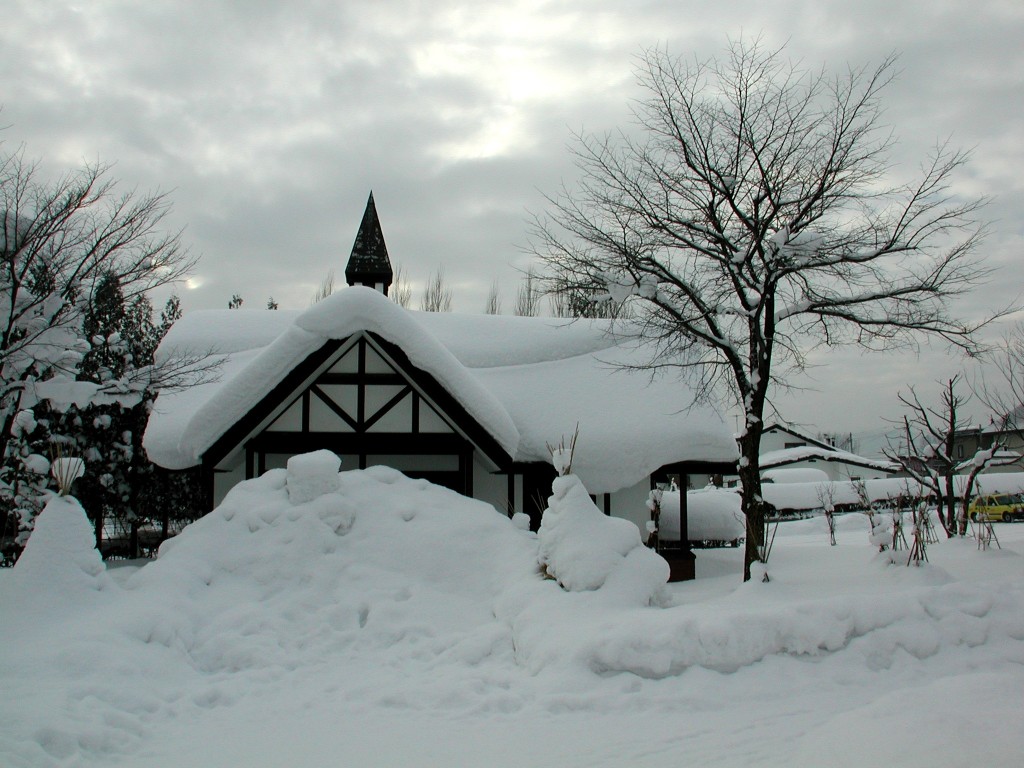
I have a "building as evangelism" story for you from Church of the Ascension in Buffalo, New York (pictured above). Ascension has welcomed in their worship midst for years now a "homeless" man, who draws from the offering plate as often as he contributes. He's there every Sunday at exactly the right time for church. When I've met him, we've had moments when we've connected, eye to eye, and I've blessed him and greeted him. Then his eyes would roll and he'd be somewhere else....
The Ascension folks missed him for a few weeks, then saw in the obituary a person whose basic description was like his, and had the same name. It was their "homeless" Paul.
They shared the news amongst themselves and independently went to the funeral home wake. They met Paul's cousins who all live in the area, and found out that he was a Marine Corps officer in Vietnam who never successfully reintegrated into society and became a drug addict. Ascension learned that he never made it anywhere and hadn't seen his family in over 15 years. The family learned that Paul had a faith community, and that it was the one
appointed time he made -on time- every week. The family welcomed Ascension's presence, and they celebrated the Eucharist together.
Ascension is experiencing his loss, but celebrating the blessing that they both received and were able to share. Amazing people. An example to me of the gift of God's Church to the world.

Tuesday, January 23, 2007

The Great Commission

CONFLICT BRINGS OUT THE BEST IN TINY RURAL ARKANSAS CHURCH LOCATED IN THE HEART OF THE BIBLE BELT

Submitted by Susie Mosly from Christ Church, Mena, Arkansas

Our tiny mission church in the Ouachita Mountains of western Arkansas is experiencing an awakening. Since Sept. 3 eleven individuals have joined our little church.

THE brief recent history:
Over the summer of 2006 eight members left to form a conservative Episcopal church in our town. They took their story to the statewide newspaper which ran a front page story which included quotes from several Arkansas dissidents including Mena. Before the exit, we had 40 on the roles with the average Sunday attendance of 15. After the exit, we all made a commitment to each other and the church. Individuals stepped forward to do the everyday chores of a church. Individuals renewed their efforts as lay readers and the reading of sermons on Sundays. We did not gossip or say hateful things. We were just very sad. We were making it but...

THE story:
Why are we experiencing this awakening?
For the first time in decades we have a missionary priest. His name is Father Jos Tharakan. He comes to Mena twice a week from his isolated farm 110 miles north of Mena. His biography is fascinating: born a Catholic in southern India, became a Franciscan monk at 16, worked as a priest with lepers for Mother Teresa for three years, came to America and was assigned as a priest to Arkansas, decided priests should be married, left the Catholic church, became a hospital chaplain, met and married an ordained American Baptist minister, had a child, was called to be an Episcopal priest, and his first Episcopal church is Christ Church--Mena, Arkansas.
Father Jos is a very special person!
.
THE rub:
We are desperate to keep Father Jos. Why? We are being spiritually fed. It is as if an angel has been placed in our lives. There are so many in our area who are in need of a spiritual family. We are poor financially. The people of Ouachita Mountains are poor. Our tiny congregation has pledged $6,000 more than last year for a total of $24,000. We are pledged out and are now trying to find ways to pay for Father Jos and his family to be fulltime in Mena. It will take $72,000 according to the salary and benefits required by the Diocese of Arkansas. The irony is our little church for years has given 18% to the diocese which is above what is requested by the diocese. We are a sister church for an Episcopal mission on an Indian reservation in the Dakotas. We now have special needs of our own.

THE question:
We are willing to do what we can to fulfill the Great Commission. Do you have any suggestions or ideas?

Susie Mosley (
smosley1@allegiance.tv )

Monday, January 22, 2007

The Right Rev. C. Christopher Epting Joins the Blogging World


The below is from Bishop Epting, who serves as the Episcopal Church's Deputy for Ecumenical and Interfaith relations. He announces the launch of his new blog...
Well, friends, I have decided to take the plunge into the “blogosphere!”

That We All May Be One will contain periodic reflections from me about unity – in the church, among people of faith, in the human family.

You can access it at http://ecubishop.wordpress.com/

The good thing is, you may choose to go to it – but it will never come to you (in your inbox) again!

Happy New Year!.


C. Christopher Epting, Bishop
Deputy for Ecumenical and Interfaith Relations
The Episcopal Church
815 Second Avenue
New York, NY 10017

Wednesday, January 17, 2007

Diocese of Western New York


Mission Renewal in the Diocese of Western New York!

On January 12 and 13, 2007, over sixty people representing several small Episcopal congregations in the Diocese of Western New York gathered to explore how they are living out God’s mission as individuals, congregations, and as members of their larger community. The event was organized by the Rev. Victoria Duncan, who also served on the design team with The Rev. George Martin and me. Both George and I presented. Church of the Ascension in Buffalo served as the host congregation.

The focus of the event was on Sharing Your Story…On Friday evening, participants worked in small groups, together becoming more aware of the ways God has worked, acted, and touched their individual lives (an awareness of how God has worked and acted in our lives and an ability to articulate this awareness is at the heart of evangelism). Saturday morning was devoted to learning more about the particular community in which each congregation is located (with the goal of encouraging congregations to look outward to identify where and how they might make Jesus’ reconciling love known on a local level). Saturday afternoon explored the degree of rapidity of secular change and looked at the tremendous field of mission opportunity that exists today; the question becomes are our congregations willing to change to meet the changing circumstances?

I came away from this gathering with great hope for many reasons. First, the number that gathered exceeded our expectations, once again exemplifying how hungry people are to find ways to become more effective communicators of our faith (the fact that every Start Up Start Over books to capacity is another example) The thoughtfulness, experience and insight on the part of the participants was also inspiring. And, quite simply, this group was one of the most hospitable I have encountered. May God continue to bless the people of the Diocese of Western New York, and I can not wait to see how they will continue to live out the Great Commission and the Great Commandment in new and motivating ways.

From a still unthawing blogging priest

Wednesday, January 10, 2007

A Lighthearted Wednesday


They're Back! Church Bulletin and Announcement errors. This is from a widely distributed e-mail with out an identified author/editor. There are some of the old ones I've seen a bunch of times, but some new ones as well. Even the second or third time through they are good for a laugh...

The Fasting & Prayer Conference includes meals.

The sermon this morning: "Jesus Walks on the Water." The sermon tonight: "Searching for Jesus."

Our youth basketball team is back in action Wednesday at 8 PM in the recreation hall. Come out and watch us kill Christ the King.

Ladies, don't forget the rummage sale. It's a chance to get rid of those things not worth keeping around the house. Bring your husbands.

The peacemaking meeting scheduled for today has been canceled due to a conflict.

Remember in prayer the many who are sick of our community. Smile at someone who is hard to love. Say "Hell" to someone who doesn't care much about you.

Don't let worry kill you off - let the Church help.

Miss Charlene Mason sang "I will not pass this way again," giving obvious pleasure to the congregation.

For those of you who have children and don't know it, we have a nursery downstairs.

Next Thursday there will be tryouts for the choir. They need all the help they can get.

The Rector will preach his farewell message after which the choir will sing: "Break Forth Into Joy."

Irving Benson and Jessie Carter were married on October 24 in the church. So ends a friendship that began in their school days.

At the evening service tonight, the sermon topic will be "What Is Hell?" Come early and listen to our choir practice.

Eight new choir robes are currently needed due to the addition of several new members and to the deterioration of some older ones.

Scouts are saving aluminum cans, bottles and other items to be recycled. Proceeds will be used to cripple children.

Please place your donation in the envelope along with the deceased person you want remembered.

The church will host an evening of fine dining, super entertainment and gracious hostility.

Potluck supper Sunday at 5:00 PM - prayer and medication to follow.

Ladies Bible Study will be held Thursday morning at 10 AM. All ladies are invited to lunch in the Fellowship Hall after the B. S. Is done.

The pastor would appreciate it if the ladies of the congregation would lend him their electric girdles for the pancake breakfast next Sunday.

The Low Self Esteem Support Group will meet Thursday at 7 PM. Please use the back door.

The eighth-graders will be presenting Shakespeare's Hamlet in the Church basement Friday at 7 PM . The congregation is invited to attend this tragedy.

Weight Watchers will meet at 7 PM at the First Presbyterian Church. Please use large double door at the side entrance.

The Associate Minister unveiled the church's new tithing campaign slogan last Sunday: "I Upped My Pledge - Up Yours!"

Friday, January 05, 2007

Welcoming and Incorporation


Yes, this is really true…

I recently became reacquainted with an old pal from college who I had not spoken with for over 20 years (says the geriatric pastor). We’ve been enjoying our renewed friendship, and he’s intrigued by the fact that I went on to pursue ordained ministry. To more fully understand this development in my life, he decided to attend an Episcopal Church last Sunday (we live in different regions of the country.)

Why is it a big deal that he went to church? The rub is he has never, ever entered a church in his life. Any church. Any worshipping community. And off he goes to St. Swithens…this is how he described the experience:

I looked in the phone book and found two Episcopal Churches listed. I went by the first one, but there was no sign and I thought it was abandoned. I wondered, “Can a church go out of business? I didn’t think they could.” I then went on to a larger church a little further on. I sat in the parking lot for a long time with my knees shaking, watching as people got out of their cars, and wanting to go in a little late to just sneak in to the back. However, when I finally mustered the nerve and entered the courtyard where I had seen people enter, I was faced with two closed doors. Not knowing which to choose, I opened one and entered. Unfortunately I had selected incorrectly and entered the front of the church. Trapped with everyone staring, I quickly found my way to the first row.

I was unable to follow anything anyone was doing, and no one brought me the program that they all seemed to be using. I was kind of freaked out--everyone stands, then they sit, they say prayers and words, they cross themselves, they change books. I didn’t know what on earth they were doing or what was going to happen next. Increasingly intimidated, as I sat in the front row the preacher suddenly decided to “preach” from the center aisle, right next to where I was sitting. As he was preaching he then said something that made everyone start mumbling some phrases again, and the preacher, still in the center aisle, totally freaked me out and grabbed my hand. I thought I was being singled out, but then realized that everyone was getting up and moving all around the church hugging and shaking hands with each other.

Next, something happened at the table up front, and then everyone got up to leave. But they all headed for the front door where I’d entered. As I followed them up I realized that they weren’t leaving; instead, they all kneeled and someone brought around some bread, then we all went back to our seats.

Finally, after it was all over, someone came up to me with a card and asked me to write my contact information and answer a question. The question asked what my interest at St. Swithens was. As I really didn’t know what to put, I remembered that I’d often heard Christians talk about baptism, so I wrote baptism. All the people then disappeared off into another building, I watched, and then left in my car.

That evening, when he shared this story by phone, I couldn’t help but want to redeem the situation. I asked if the preacher perhaps said something that made him think, or that might be relevant to his life (he has recently began to care take his elderly mother). He said that the preacher mostly talked about something called a diocese, and asked me what a diocese was. Sigh.

While his story reads like a farce, it is, once again, instructive to those of us who profess to be followers of Christ. We never know who it is that will walk in the door (maybe even the wrong door), what issue that person may be experiencing, and if this is the only opportunity they will ever have to be introduced to the transformative love of Jesus Christ.

What guest might you have among you this Epiphany?

Thursday, January 04, 2007

Resource for Sunday, January 7

Nancy Ann McLaughlin, in her new book Do You Believe? Living the Baptismal Covenant (Morehouse Publishing, 2006) offers a tremendous resource for Sunday, January 7, the Baptism of our Lord. On page 26, McLaughlin offers an opening prayer, the body of a sermon, a guided meditation, the renewal of the Baptismal Covenant, and concludes with the peace.
In addition to the liturgy, McLaughlin's book presents the findings from her examination of forty Episcopal parishes in the Untied States. Specifically, she sought to discover what an "active, intentional, energized awareness of baptismal ministry looks like." In a focused and clear way, she looks at each section of the baptismal covenant, chapter by chapter:
  • Do You Believe?
  • The Church
  • Will You Continue?
  • Return to the Lord
  • Will you Proclaim?
  • Christ in All Persons
  • Every Human Being
  • God's Help

The book is especially helpful in that it provides study questions at the conclusion of each very readable chapter, making it an excellent resource for a vestry or a Lenten Study group. I highly recommend it.

Establishing a Health Ministry Program in the Small Church


Health Ministry in the Small Church: An Introduction Tele-seminar

Jointly sponsored by National Episcopal Health Ministries, The Episcopal Church Center Office of Congregational Development and The eMinistry Network.


Leaders: Jean Denton and Maryfran Crist

Date: Wednesday, January 24, 2007

Time: 8:00 pm Eastern (one-hour teleclass)

Cost: $12.00

Class size: Limited to 12

Class#: OMC-NEHM-100


To Register: http://eministrynetwork.org/omc.htm#HealthMinistry

Health Ministry in a local congregation is an intentional ministry focusing on both healing and health, and combining the ancient traditions of the Christian community and the knowledge and tools of modern health care. This introductory class will have a focused presentation of information along with plenty of time for questions and answers.

Who should attend?

Anyone from a small congregation (average Sunday attendance of 70 or less) who is interested in learning about health ministries and how to incorporate health ministry as part of pastoral care and outreach in their congregation

What will you learn?

Understand the definition of health ministry
Learn the process for beginning a health ministry in your congregation
Understand how to implement and evaluate a health ministry
Identify resources available to you for beginning a health ministry

The presenters are the Rev. Jean Denton and Maryfran Crist.

The Rev. Jean Denton has been active in health ministry and parish nursing for fifteen years. Drawing on her background in medical-surgical nursing, community health, teaching, and administration, she began serving as the full-time Director of Health Ministries at St. Paul’s Episcopal Church in Indianapolis in 1989. She co-chaired the national task force that incorporated Health Ministries Association, and served as its first vice president. Ordained to the Vocational Diaconate in 1992 and to the Priesthood in 2005, Jean served as the Director of National Episcopal Health Ministries for several years and is now Senior Associate Rector at St. Paul’s Indianapolis,. She has written the booklet An Episcopalian Answers Questions about Health Ministries and Parish Nursing, and the manual Steps to a Health Ministry in Your Episcopal Congregation. She helped develop and now teaches the health component of CREDO, the clergy wellness program of the Episcopal Church. She is the author of Good is the Flesh: Body, Soul and Christian Faith (Morehouse Publishing, 2005).


Maryfran Crist is Regional Representative for National Episcopal Health Ministries and a parish
nurse in rural Illinois. She has been a registered nurse for over 25 years and a parish nurse since 1994. Currently she balances her work between a rural health center in LaSalle County Illinois as a family nurse practitioner, an asthma educator and as a parish nurse for a cluster ministry of four small Episcopal churches. Maryfran has worked with multi-staff churches as well as very small churches and feels that health ministry is for all churches. She speaks throughout the Midwest as well as leading workshops from finding joy to dealing with grief. In her spare time, she enjoys time with her husband John, an Episcopal priest, is a clown (Marygold) and plays with eight grandsons.

Gulf Coast, USA Mission Trip Opportunity


The below is posted by Shiela Vossler ( mabear2@sbcglobal.net )
There will be another trip to Mississippi Camp Coast Care in the spring. The dates are March 17 - 31, 2007. The Fearless Leader and Resource person on this trip will be Emilie Holder (wonderlady_7@yahoo.com) . She would like to have a big group accompany her for all or any part of that time. She will need to know as soon as she can as reservations for a cot must be made with the camp director of volunteers. Al and I had such a marvelous experience in our last 2 trips that if you haven't been, we encourage you to lend a hand to help those who have lived through such devastation and are finding hope and joy during the rebuilding of their lives.

If you cannot go in person, please consider a donation to send along. Also we ask that you PLEASE talk to your friends about joining the team. We especially welcome those with construction type experience, however, all willing hands and feet will find meaningful work to do. Please prayerfully consider this invitation to take your spiriitual life up a notch by becoming God's Ambassador on the Gulf Coast of Mississippi.
Love and Peace, Sheila Vossler

Tuesday, January 02, 2007

New Year's Blessing


Watching the ball drop in Times square as 2007 dawned, thoughts and new learnings about congregational development from 2006 swirled through my head (similar to the confetti falling from the buildings—while those pieces of confetti had secular inspirational messages, my own thoughts were of a decidedly Christian nature.)

In particular, I thought about congregational development, the area where God has gently led my ministry over the past year. What really is the mission of congregational development? (Equipping congregations to better experience, grow in, and make known the transformative love of Christ would be my answer.)

So many factors contribute to small membership congregational development, and what makes these congregations unique. If the factors were to fall like confetti, among them would be members’ profound sense of belonging and acceptance, the congregation’s fortitude to not just survive but to adapt and thrive under sometimes challenging circumstances, and the single-cell system dynamics. Financial sustainability and creative models of leadership are also factors. As is an innate ability to know the wider community and reach out in incredible and inspirational (Herculean) ways.

Therefore this New Year’s post serves as a virtual toast—to the small church. To all who worship, minister, and serve in small churches. May God continue to bless you with the mission, passion and energy to reach out with Christ’s love for decades to come…I consider it an honor to be part of the journey.

S.


Wednesday, December 20, 2006

The Unspoken Message


This morning on my way to work I passed a church in Manhattan (which will remain unnamed). I was so surprised to see their "Christmas" display. So surprised I took out my camera and captured the image.
In front of this admittedly urban church, six Christmas trees had been placed in holders, and then each one was tethered and locked with paddle lock and chain to the railings on the sides of the church entrance.
Now keep in mind these are small trees (3 feet or less), rather sickly, and not even big enough to fill their stands. Therefore, when the chains were put on, the trees were pulled to the side, making the whole scene sad and pathetic. To make it worse, passers-by constantly throw their trash around the base. While I am certain this was done by a very well meaning and faithful Christian, the message sent was certainly not one of the abundant life and light that Jesus brings to our lives and the world.
For me it raised several points that might be instructive:
  • How often do we in the church continue to do things because we've always done them, and not evaluate whether they still work in today's context? This tree was a perfect example.
  • Are we, who are close to the church, able to "see" what an outsider might see? Or are we blind to the unspoken messages and signals that we send? We might be blind to the way our buildings and worship space look to the outside world, blind to how our practices might be intimidating, or unaware of how we might speak in our own form of Anglican tongue that a visitor might not understand (ex: "Oh, you're visiting us today with your four children? Well when Don, the head usher gets here, you'll find him in the Narthex. He can tell you where the kids will go for Sunday school, but they stay with their parents until after the collect for purity and then leave for their classes, following the crucifer...They'll rejoin you after the Great Amen so keep an eye out for them." This really happened to our family! While I did understand, mostly, I couldn't imagine what I would have thought had it been my first visit to an Episcopal Church.)
  • How do our actions show our priorities and values? When I saw those chained trees, I asked myself, if someone was so desperate that they chose to steal a very small, ugly Christmas tree, would that be such a great loss to the church?

A rant and a rave from this priest, but it comes with the heartfelt prayer that all who strive to be followers of Jesus Christ will make the true message of his love and light known this Christmas and always...S.

Monday, December 18, 2006

FACTs on Growth Released

A press release from the Hartford Seminary:

Worship, Websites, Conflict Affect Growth in Congregations

December 11, 2006 – Contemporary worship, geographic location, a website and the absence of conflict are key factors in why some congregations in America are growing, according to the latest national survey of U.S. faith communities.

The survey, sponsored by the Cooperative Congregational Studies Partnership, found that wanting to grow is not enough. Congregations that grow must plan for growth: “Congregations that developed a plan to recruit members in the last year were much more likely to grow than congregations that had not.”

The survey findings are available in a newly released report, “FACTs on Growth.” The data was taken from the Faith Communities Today 2005 (FACT2005) survey of 884 randomly sampled congregations of all faith traditions in the United States. The survey updates results from a survey taken in 2000, and is the latest in CCSP’s series of trend-tracking national surveys of U.S. congregations.

David A. Roozen, Director of the Cooperative Congregational Studies Partnership and Professor of Religion and Society at Hartford Seminary, said that, “If you are at all interested in research on ‘church’ growth, this brief report is must reading. It tests the continuing salience of long ‘taken for granted’ principles of growth (e.g., location, conservative theology) as well as the more recently proposed (e.g., contemporary worship, spiritual practices and purposefulness).”
“Perhaps most importantly, it suggests several newly emergent dynamics to consider (e.g., the potential for growth in downtown areas and within multi racial/ethnic congregations). It is a helpful and important follow-up to the “Pockets of Vitality” analysis of the ground breaking FACT2000 national survey,” Roozen said.

Among the findings in the new FACTs on Growth report:

  • Congregations that change worship format and style are more likely to grow. More than half the congregations that use contemporary styles of worship have experienced substantial growth since 2000. Frequency is important as well: The more worship services a congregation holds, the more likely it is to have grown.
  • Congregations located in new suburbs are more likely to experience growth. But surprisingly the second best area for growth is the downtown of metropolitan areas.
  • Congregations that have experienced major conflict are quite likely to have declined in attendance. The strongest correlate of growth is the absence of serious conflict.
  • Congregations that have started or maintained a website in the past year are most likely to grow. The effort to have a website indicates that the congregation is outward looking and willing to change by non-traditional means.
  • While most congregations in America are composed of a single racial/ethnic group, those that are multi-racial are most likely to have experienced strong growth in worship attendance.
  • More important than theological orientation is the religious character of the congregation and clarity of mission and purpose. Growing churches are clear about why they exist and about what they are to be doing – “purpose-driven growth.”
  • Congregations that involve children in worship are more likely to experience significant growth. Also, important to growth is the ability of congregations to attract young adults and children with families.
  • Almost all congregations say they want to grow, but it takes intentionality and action for growth to occur. Congregations that developed a plan to recruit members in the last year were more likely to grow than congregations that had not. Particularly helpful in achieving growth are sponsorship of a program or event to attract non-members or the existence of support groups.

The report was written by C. Kirk Hadaway, Director of Research at the Episcopal Church Center in New York.

A link to view “FACTs on Growth” online is available at: http://fact.hartsem.edu/products/index.html.

Full color, printed copies can be ordered at the same web address. Single copies of the 17-page booklet cost $8.50 including postage and handling; discounts are available on multiple copies. For special orders and questions, contact Mary Jane Ross, at Hartford Seminary’s Hartford Institute for Religion Research, (860) 509-9543 or mross@hartsem.edu.


Faith Communities Today surveys and publications are products of the Cooperative Congregational Studies Partnership, a collaborative, multifaith coalition of American faith communities affiliated with Hartford Seminary’s Hartford Institute for Religion Research. Researchers, consultants and program staff representing 39 denominations and faith groups contributed to the FACT2005 survey.


FACT/CCSP strives to offer research-based resources for congregational development that are useful across faith traditions, believing that all communities of faith encounter common issues and benefit from one another’s experiences. It also informs the public about the contributions of congregations to American society and about the changes affecting and emanating from one of America’s major sources of voluntary association – local congregations. For more information on CCSP, visit fact.hartsem.edu.


About Hartford Seminary and the Hartford Institute for Religion Research: Hartford Seminary focuses on interfaith relations, congregational studies and faith in practice. The Hartford Institute for Religion Research has a 30-year record of rigorous, policy-relevant research, anticipation of emerging issues and commitment to the creative dissemination of learning.

For more on the Seminary and the Institute, visit the websites (http://www.hartsem.edu/ or hirr.hartsem.edu) or contact David Barrett at (860) 509-9519 or dbarrett@hartsem.edu.
David Roozen, Director of the Hartford Institute for Religion Research at Hartford Seminary, is available for interviews at: roozen@hartsem.edu or (860) 509-9546.
C. Kirk Hadaway, Director of Research at Episcopal Church Center, New York, can be reached for interviews at: khadaway@episcopalchurch.org or (212) 922-5331.

Thursday, December 14, 2006

Weekly Lectionary Scripture and Study Guides Directly to Your Own Church Web Site!!!


A NEW RESOURCE FROM CHURCH PUBLISHING!!!


Preparing for Sunday is the quick, easy and affordable way to include the weekly lectionary readings on your own church website. Now, your parishioners can have the Sunday readings at their fingertips anytime, day or night.

No more clicking to connect with outside websites. No more searching through scripture to track down different readings. With an easy one-time setup, we update your church's website every week... with no advertising!

Preparing for Sunday includes last week's, this week's and next week's readings. Plus overviews, scripture backgrounds, reflections and prayer starters designed to enrich the understanding of each Sunday's readings.

For $15 a month, give everyone in your parish the chance to read, reflect and pray over the Sunday scriptures.
For a sample and easy sign up, visit http://www.preparingforsunday.com

Monday, December 11, 2006

Open University


EXPAND YOUR KNOWLEDGE!!!
The Open University is making some of its educational resources freely available online for learners and educators anywhere in the world to use. The OpenLearn Website initially includes "some 900 hours of material on a variety of topics - from access to postgraduate level……..The OU sees the project as an obvious extension of its mission to address significant differences in the access people have to educational opportunities…"
It is possible to browse the outlines without registering: when you do register (which is free) you can also gain access to the learning activities etc. They aim to have 5,400 hours of material available by April 2008
The Open University class offering are particularly beneficial to those in rural and/or geographically isolated areas.
This information comes from a list serve distributed by Joanna Cox, National Adviser in Lay Discipleship and Shared Ministry in London.

Monday, December 04, 2006

2007 Roanridge Awards Announced

Picture from Roanridge, circa 1947

2007 Roanridge Awards Announced

On November 13, 2006 Office of Congregational Development announced the 2007 Roanridge Trust grant recipients.

A record number of grant requests were received for 2007 funds. Thirteen different diocese and organizations were awarded grants including:
· The Diocese of Northern Michigan for a Ministry Development Internship Program.
· The Diocese of Vermont for the development and expansion of a Companion Program for congregations in a period of transition in terms of leadership (one of the two applicants to score the maximum possible points).
· The Diocese of Lexington/Appalachian Ministries Educational Resource Center for providing experiential training in rural ministry for seminarians from urban backgrounds.
· The Diocese of North Carolina: Christian formation training by the Rev. Dr. Leon Spencer targeting rural parishes, plus a training program by the Sand Hills Cluster to strengthen and expand cluster ministry.
· The Diocese of Eastern Oregon: A training by Helen Spector and Anne Hallisey in the use of family systems and Appreciative Inquiry for the development and implementation of mission and ministry.
· The Diocese of Newark/Haven of Hope for Kids: A seminary internship in a revitalized rural parish that found new life by starting a vacation retreat home to be used by urban lower income families caring for critically ill children. (The second of the two applicants to score the maximum possible points.)
· Diocese of Southern Virginia: A training by the Rev. Dr. Robert Partlow and Mrs. Judith Carlson to evaluate the possibilities open to rural congregations that can marginally afford a full time priest.
· Rural Ministry Network: rural ministry training via the quarterly publication of Crossroads and the participation in rural ministry trainings.
· Diocese of Colorado: a training by the Rt. Rev. Elliott Sorge, the Rev. Lada Hardwick, and the Rev. Wayne Schwab to help congregations move from maintenance to mission and help them to be vital with out full time clergy.
· Diocese of South East Florida: specific training for the creation of a multi-cultural, multi-generational, multi-parish and multi-lingual ministry in a rural, lower socio-economic, ethnically diverse agricultural area.
· Diocese of El Camino Real and the Diocese of Northern California: the training of local church leaders in a satellite Filipino church across diocesan borders (approved by the Ecclesiastical Authority in both dioceses.)
· Diocese of Alaska: the development of a cross-generational web-based Christian formation program by the Rev. Katherine Hunt and Gail Loken to be used in rural churches.


The Roanridge Trust is to be used specifically for the “training of town and country clergy and rural Christian workers of PECUSA” (now known as The Episcopal Church).
The application period for 2008 funds will be from June 1 to September 1, 2007. For more information, please visit http://www.episcopalchurch.org/smallchurch_51593_ENG_HTM.htm?menupage=51387
or contact the Rev. Suzanne Watson at swatson@episcopalchurch.org

Conference Announcement!


Save the Date…

The Office of Congregational Development is pleased to announce a conference on

Creative Models of Sacramental Leadership
In the Small Church

October 7-10, 2007

Kanuga Camp and Conference Center
Hendersonville, North Carolina

Confirmed Presenters:

· The Most Rev. Katharine Jefferts Schori, Presiding Bishop and Primate of the Episcopal Church in the United States
· The Most Rev. David Moxon, Archbishop and Primate of New Zealand
· The Right Rev. James A. Kelsey, Bishop of the Episcopal Diocese of Northern Michigan
· The Rev. Stephen M. Kelsey, Missioner/Superintendent Greater Hartford Regional Ministry

Additional presenters to be confirmed on the topics of interdenominational clusters and mergers, plus other creative models.

This conference is designed for Bishops, Diocesan Staff, Clergy and Lay Leaders interested in exploring different models of sacramental leadership in churches with an average Sunday attendance of 70 or less.

Look for more information and registration material in early 2007, or contact The Rev. Suzanne Watson at swatson@episcopalchurch.org

Monday, November 27, 2006

CCAB Meeting In Chicago


From November 15-17, 2006 the Committees, Commissions, Agencies and Boards of the Episcopal Church met in Chicago.

The Standing Commission for Small Congregations is composed of 11 members (representing the dioceses Navajoland, Southeast Florida, Kansas, Vermont, Northern Michigan, Virgin Islands, Puerto Rico, North Dakota, Spokane, Easton, and Louisiana.) Additionally, appointed members (with out vote) were present from the House of Deputies, Executive Council, and the Church Center. All in all, it was a Spirit-filled gathering of mission oriented church leaders that filled me with hope for our small churches.

During the meeting four goals were outlined for the next triennium. Specifically:


  • Continued dialogue with the Church Pension Group re: church benefits and compensation for lay staff and clergy (esp. part time) and creating mechanisms to assist graduating seminary students with debt relief.

  • Reporting on convergence of statistics on Status of Women and Small Congregations and leadership of lay and ordained women in small congregations to General Convention '09.

  • Continue to share stories of vitality.

  • Demonstrate a presence at General Convention '09 that moves the whole church beyond sympathy to action.

Means to achieve these goals include:


  • Tools for publicity and evangelism in the small church.

  • Tools for worship in small congregations.

  • Tools to engage targeted constituencies.

  • Networking with other CCABs.

  • Support Church Center Staff with leadership training/dissemination of information to diocesan staff and parish laity and clergy with the above identified tools that encourage churches to grow spiritually/missionally, and sometimes in numbers, recognizing that many small churches are vital in place and size while other small churches can and want to grow in membership.

From you own small church experience, would you concur that these goals and means reflect the most pressing needs and concerns of the small congregation? Why or why not?

Monday, November 13, 2006

Latino/Hispanic Congregational Development


The Office of Ethnic Congregational Development--Latino/Hispanic Ministry Department offers a wealth of information on their web site, found at http://www.episcopalchurch.org/hispanic_41704_ENG_HTM.htm?menupage=1149
At this site you will find sermons in Spanish, Spanish liturgies (such as for The Quinceanera, a fiesta for the thanksgiving of the coming of age for girls--the image above is an example of a decoration), the Office of Daily Prayer in Spanish, many links, plus much much more.
For more information about the Latino/Hispanic Congregational Development, contact
The Rev. Anthony Guillén Missioner, Latino/Hispanic Ministries at aguillen@episcopalchurch.org or phone 800.334.7626 ext. 5349.

Voices of Young Adults: A DVD


In June 2005, the Episcopal Church invited young adults from across the USA to share their opinions about the church. Some of these persons are active in congregational life, some are not, but all share a wellspring of affection for the Episcopal Church and hope for a church more engaged with the gifts that young adults have to offer.

Every congregation in the Episcopal Church was sent a copy of the DVD. On it you will find three video segments of 9 minutes each, each followed by a set of suggested discussion questions. I encourage your congregation/vestry to listen to these voices with pauses for questions and discussion.

You will also find a down loadable version, along with the featured young adults' biographical statements, a user guide for the videos, and abridged transcripts at http://www.episcopalchurch.org/49662_78132_ENG_HTM.htm

Thursday, November 09, 2006

Mutual Ministry in Northern Michigan


Mutual Ministry: A Primer

Greetings!

I am just back from a dizzying trip of church visitations, teaching and learning.

Part of this trip involved attendance at a Visitor’s weekend in Northern Michigan for those interested in learning more about Mutual Ministry. . Despite the fear of crashing the Bishop’s car which I’d borrowed during a snow storm to drive through a mountain pass (not a good idea for a San Diego native), the weekend was informative, inspirational, and provided a good opportunity for anyone wishing to learn more about the experience of congregations in Northern Michigan. The visitors were from areas across the United States, and abroad (Scotland).

In this depopulating and geographically isolated part of the United States, small congregations face many seemingly overwhelming challenges; but despite these challenges, these congregations have not just struggled to survive, they are creatively finding ways to thrive and continue to bring the message of Christ’s transformative love to their region and the world in a very vital way.

In the Northern Michigan model “ministry support teams” are raised up and commissioned for ministry from the congregation. This includes the ministers of education, music, and pastoral care, as well as the preacher, deacon and the sacramentalists (which are ordained but not seminary trained and work with out financial compensation) to name a few. Regional missioners and the bishop (all seminary trained at present) work as a support team for the individual congregational teams across the diocese.

Did I walk away with questions? Yes. Do I think it is the answer for every small congregation? No. But what I walked away with was a profound appreciation for how ministry has developed in Northern Michigan, and a challenge to continue to look, find, discover and share new and creative ways of “being church” in this post-Christendom world.

I invite your response…

If you’d like to find out more about Mutual Ministry in Northern Michigan the next visitor’s week end is scheduled for April 27-29, 2007. Contact Jane Cisluycis at jane@upepiscopal.org or call 906.228.7160.